What Is Fahm ul Quran? Meaning in Urdu & English
Fahm ul Quran means understanding the Quran — its meanings and guidance — not only reading the words. Urdu and English meanings, and how a beginner can start.
19 September 2026 · 12 min read · Fahm-ul-Quran Online Quran Academy
Quick Answer: What Does Fahm ul Quran Mean?
Fahm ul Quran means understanding the Quran — grasping its meanings, guidance, and lessons, not only sounding out the words on the page.
In simple English, the phrase is “understanding of the Quran.” In everyday Urdu it is usually explained as قرآن کو سمجھنا — to understand the Quran — or قرآن کی سمجھ: a grasp of what the recitation is saying. That is the core of the search. The rest of this article explains the wording, the layers of understanding, and how a beginner can start without treating this as a second “how to learn Quran” guide.
How classes are organised, how an adult restarts from letters, and how letters are pronounced are different questions. Those live in how to learn Quran online, learning the Quran from scratch as an adult, and what Tajweed is. This page stays with the meaning of Fahm ul Quran.
What Does “Fahm” Mean?
Fahm (فَهْم) is an Arabic word. In classical lexicons it is the verbal noun of فَهِمَ: to understand something with the mind, to know it, to apprehend its meaning — not merely to hear the sound. Lane’s Arabic-English Lexicon records that sense as knowing a thing mentally and grasping what an expression means.
In modern written Arabic the same root still means understanding or comprehension. Urdu inherited the word as فہم, used for سمجھ, سمجھ بوجھ, and ادراک: the ability to take in a meaning, not only to repeat a sentence.
That is why “fahm” is a useful word next to the Quran. Recitation can be accurate while the listener still does not know what was said. Fahm names the further step: the meaning has reached the mind.
It is not a licence to invent a private tafsir. Understanding a clear translation, learning a word, or following a reliable explanation are ordinary kinds of fahm. Deciding a disputed legal or theological point from a single verse, without scholarship, is not what the word requires of a beginner.
What Does “Fahm ul Quran” Mean in Urdu?
فہم القرآن is an ordinary Arabic-Urdu pairing: fahm (understanding) plus al-Quran (the Quran). It is an educational phrase, not the title of a specific verse.
In accessible Urdu it can be explained in more than one natural way. None of these is the only “correct” translation:
- قرآن کو سمجھنا — to understand the Quran
- قرآن کی سمجھ — a grasp of the Quran
- قرآن کے مفاہیم اور ہدایات کو سمجھنا — to understand the Quran’s meanings and guidance
The nuance is the same in each: the student is not only reading letters. They are trying to know what those letters carry — a command, a story, a warning, a comfort — as far as their knowledge and reliable sources allow.
What Does Fahm ul Quran Mean in English?
In English, Fahm ul Quran is “understanding the Quran.” Understanding can include several related activities:
- learning what words and verses mean in a reliable translation
- recognising guidance, themes, and lessons
- reading a beginner-friendly tafsir that explains a passage
- learning, where it helps, the context of a revelation
- reflecting on an authentic lesson and applying it carefully
Translation is one tool. It is not the whole of understanding. A translation gives access to meaning in another language; it is not identical to the Arabic text, and it is not a substitute for established tafsir when a verse is difficult or widely discussed.
Fahm ul Quran vs Simply Reading the Quran
Reading and understanding are complementary. One is not a replacement for the other. Recitation has its own place; meaning has another. Teachers usually keep both in view rather than asking a family to choose.
Reading
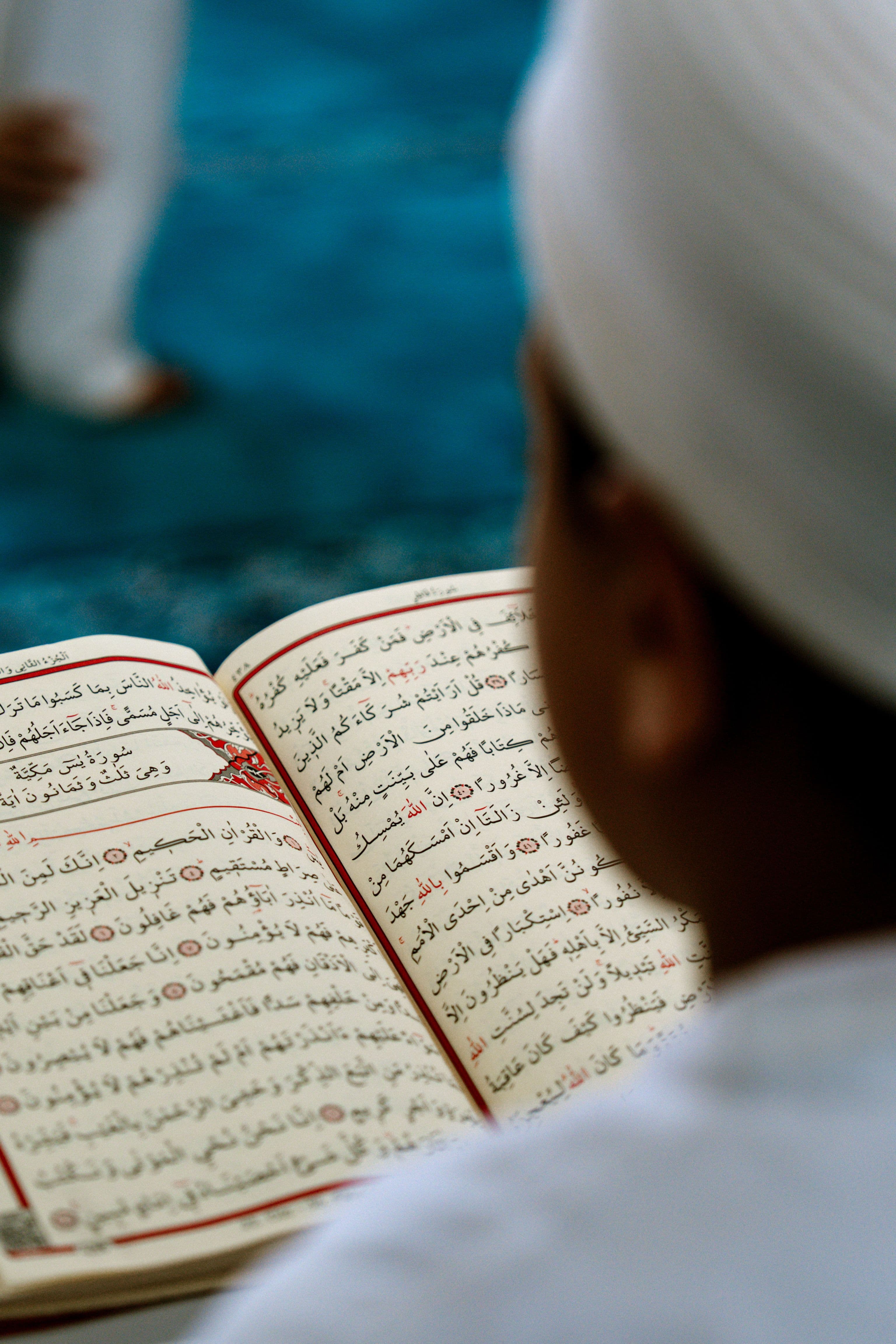
Reading is recognising Quranic letters, joining them, and reciting the line. That skill is the first door. How to form it carefully is covered in how to read the Quran correctly, not here.
Understanding
Understanding is learning what the words, verses, and teachings mean — through vocabulary, translation, and reliable explanation. How a beginner starts the vocabulary layer is in Quranic Arabic for beginners.
Reflection
Reflection is thinking about a lesson after the meaning is clear enough to think about. The Quran itself uses the language of tadabbur — reflecting upon the Book — which is related to understanding, though it is not the same word as fahm:
“Then do they not reflect upon the Qur’ān, or are there locks upon [their] hearts?”
That verse is a call to take the Quran seriously, not a lesson plan and not a ruling that every reader must issue their own interpretation. In another place the Quran describes itself as a blessed Book revealed so that people may contemplate its verses (Surah Sad 38:29). We will not stretch either verse into a tafsir they do not offer on this page.
Application
Application is trying to live by guidance that is already clear and well established — honesty, prayer, kindness, keeping a trust — without turning a short article into a fatwa service.
Why Is Understanding the Quran Important?
Understanding does not guarantee a spiritual outcome. It does change what study feels like. A student who knows what a short passage is about can listen with more attention, recognise a theme when it returns, and remember why the lesson was assigned. Reciting without any sense of meaning is still recitation; it is a thinner form of study.
Practical benefits families usually notice:
- knowing, at a basic level, what is being recited
- a clearer connection with Quranic guidance
- easier reflection because the lesson is not a closed sound
- study that is easier to keep, because it makes sense
None of this requires becoming an Arabic scholar first. It does require honest sources and a willingness to say “I do not know yet” when a verse is beyond a beginner’s tools.
What Does Learning Fahm ul Quran Involve?
Quran understanding is layered. A child and a returning adult will not use every layer in the same week. Typical layers, in no forced order:
- correct Quran reading so the text can be followed
- a small, growing store of Arabic words that appear often
- basic grammar later, if it helps the student see how a sentence works
- a reliable translation in a language they actually read
- beginner-friendly tafsir for passages they are studying
- context, where a teacher or a trusted work explains why a passage was revealed
- recurring themes — mercy, prayer, patience, the next life
- reflection on what is already understood
- practical lessons that do not invent new rulings
A beginner who can barely join letters should not be given a multi-volume tafsir. A reciter who already reads fluently may need meaning more than another alphabet tour. The mix depends on the student’s goal and background.
Can Someone Understand the Quran Without Knowing Arabic?
Yes — they can begin. A reliable translation and a careful teacher or tafsir can open meaning in English, Urdu, or another language the student already uses. Many adults start there, then add Arabic gradually.
Arabic knowledge deepens understanding. It lets a student hear word choice, emphasis, and connections that a translation has to flatten. Translation is still not the original. When a verse is debated, or when someone wants to extract a detailed ruling, that work belongs with qualified scholarship and established tafsir — not with a first-year vocabulary list.
So Arabic fluency is not an entrance ticket to start. It is a later strength, not a wall.
How Can a Beginner Start Understanding the Quran?
A practical sequence, not a certificate track:
Step 1 — Read the line correctly
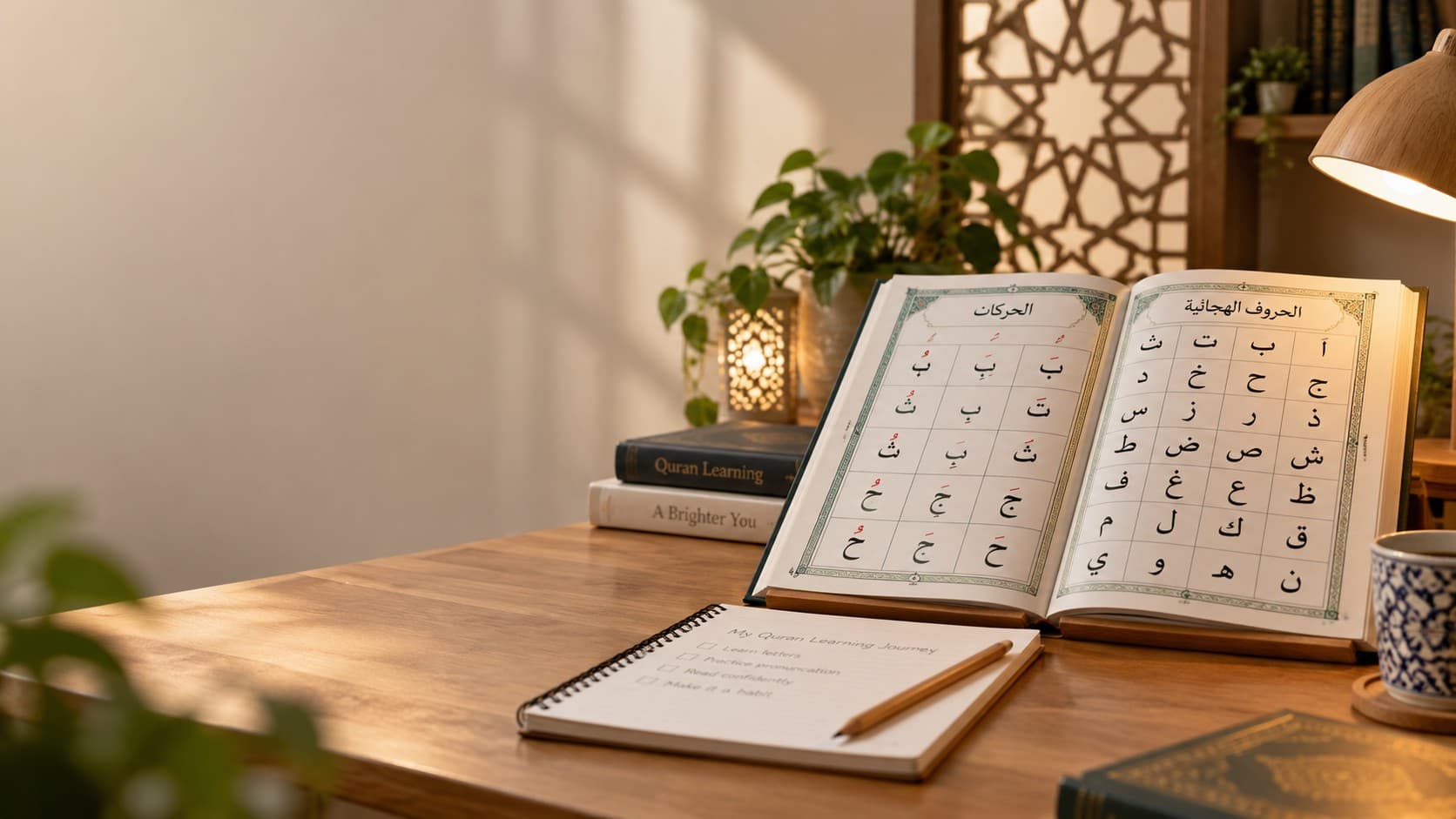
If letters and joining are still unstable, start with a primer such as Noorani Qaida for beginners and Quran reading. Meaning sits more easily on a line you can actually follow.
Step 2 — Collect a few real words
Learn high-frequency words as they appear in the passages you already recite. A notebook of ten living words is more useful than a poster of two hundred you never meet.
Step 3 — Read a reliable translation
Choose a well-known translation in your language. Read the same short passage you recited, not a random page from the end of the mushaf. Notice where the English or Urdu cannot carry every shade of the Arabic — that is expected.
Step 4 — Use a beginner-friendly tafsir
After the translation, a short, recognised explanation helps with “what is this passage doing?” Stay with works your teacher or a trusted institution recommends. Skip viral verse-of-the-day graphics that invent a moral the verse does not state.
Step 5 — Add context when it matters
Some verses are clearer when you know the situation they addressed. Others are already plain. Context is a tool, not a hobby of guessing historical scenes.
Step 6 — Ask when you are stuck
A qualified teacher can tell you whether a difficulty is vocabulary, translation, or a point that needs tafsir. That is safer than assembling a meaning from search snippets.
Step 7 — Reflect and apply what is already clear
Sit with an authentic lesson you actually understood. Apply the obvious ones. Leave the disputed ones with people who study them properly.
The practical study method — a daily routine and beginner roadmap — is in how to learn Quran with meaning. How translation differs from Tafsir is in Quran translation vs Tafsir. What Tafsir is as a beginner subject is in What Is Quranic Tafsir?. How to study a verse when you do not know Arabic is in understand Quran verses without knowing Arabic. A repeatable study session is in how to study the Quran for beginners. This page stays with what Fahm ul Quran means.
Fahm ul Quran for Children
Children can be introduced to meaning without being asked to interpret law. Age-appropriate work looks like a few words, a short story or theme they already know, a question (“what did this person do?”), and a link to good character — speaking truthfully, being gentle, thanking Allah. It does not look like a lecture on every verse they recite.
Keep lessons short. A child who can recite a small surah can still be told, in their language, what that surah is mainly about. That is understanding at a child’s scale. How a family keeps a kind home routine is a separate, practical subject in building a Quran learning routine for kids.
Fahm ul Quran for Adults
Adults often arrive in one of four places: they have never read Arabic; they recite but do not understand; they understand a little and want a structured path; or they have almost no daily time. All four can begin. The complete beginner still needs letters first. The fluent reciter can add translation and tafsir beside the same pages they already know. The busy adult can take one short passage a week rather than promising a juz a night.
Structured learning — a live teacher, a level, a slot you can keep — simply makes those layers less random. It is not a requirement for opening a translation tonight.
Reading Quran vs Understanding Quran: Is One More Important?
This article will not issue a religious ranking of recitation against meaning. Recitation has its own importance in Muslim practice. Understanding helps a learner appreciate guidance and stay with the Book as more than a sound. Together they make a more complete study. Families who treat them as rivals usually drop one and then regret the gap.
If the mouth is still guessing letters, put weight on reading. If the mouth is steady and the heart is bored, put weight on meaning. A teacher who hears the student can say which gap is larger this month.
Common Misunderstandings About Fahm ul Quran
“Fahm ul Quran only means translating the Quran.”
Translation is a doorway. Understanding can also include vocabulary, tafsir, context, themes, and reflection. A person can read a translation and still miss what a passage is doing.
“Reading the Arabic text is the same as understanding it.”
It is not. Many sincere reciters produce a correct sound without knowing the sentence. That recitation still matters. It is not fahm.
“You must become an Arabic scholar before you can start.”
You do not. You can start with a reliable translation and a careful teacher while Arabic grows in the background. Scholarship is required for deep interpretation, not for beginning.
“Anyone can interpret every verse independently.”
No. Clear, well-known meanings can be learned by ordinary students. Difficult, legal, or disputed verses need reliable tafsir and qualified scholars. Personal reflection is not the same as issuing an interpretation for others.
Learning the Quran With Understanding
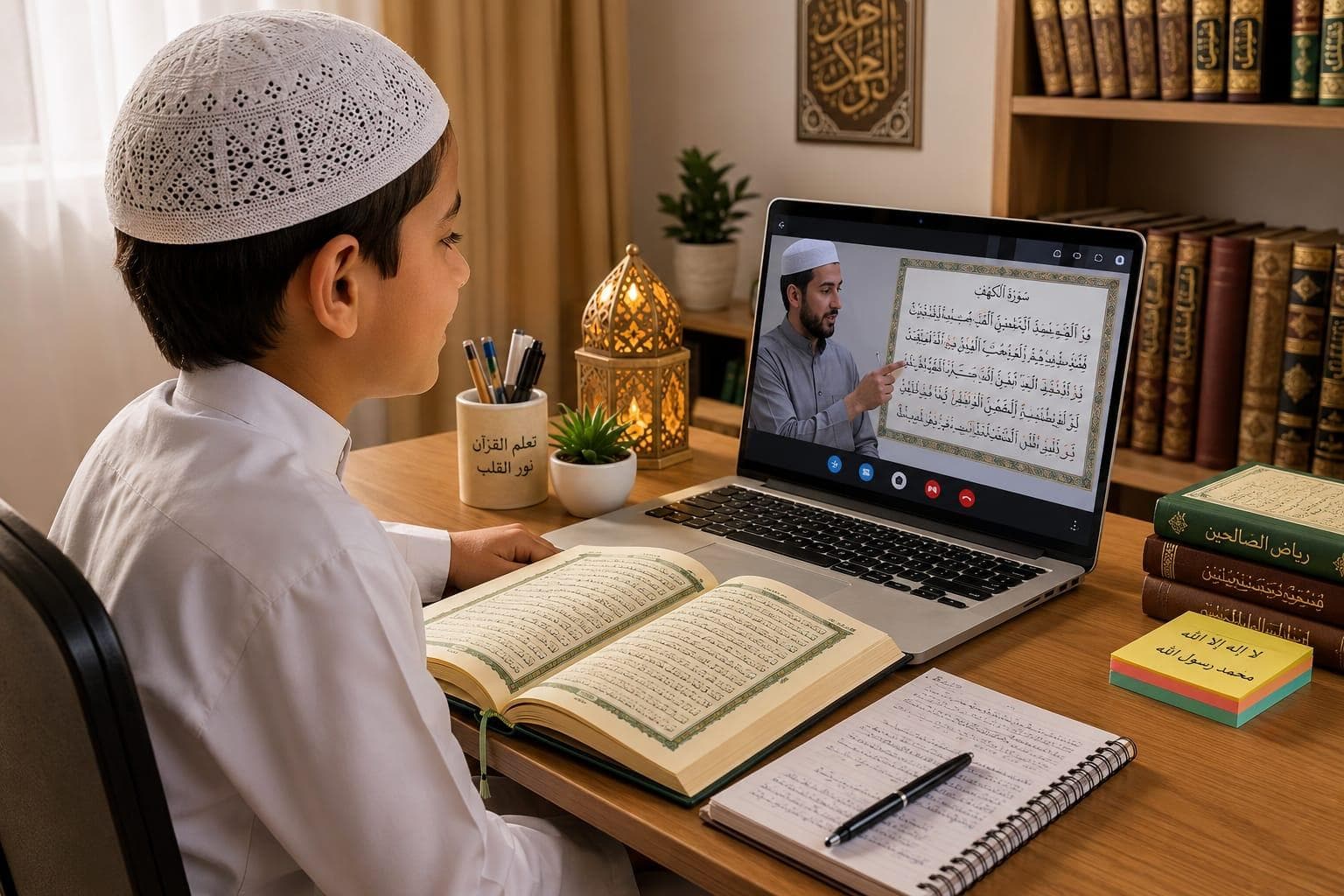
Fahm-ul-Quran Online Academy is a Pakistan-based online Quran school. The name is the same idea this article has been using: understanding of the Quran, not recitation alone. Live one-to-one classes run Monday to Friday, thirty minutes, on WhatsApp, Zoom, or Skype. Students can work on foundations, Quran reading, Tajweed, and Islamic studies alongside the mushaf — beliefs, seerah, and daily practice for those who want more than the line. A female teacher is available. The academy’s public journey is dated from 2012.
Want to study the Quran with structured guidance? Explore the Fahm-ul-Quran course: live one-to-one classes taught in Urdu, focused on translation, vocabulary, themes, and practical lessons. That page is the offer. This article stays with the meaning of the phrase.
That is a place to study, not a claim that joining a class automatically produces understanding. Meaning still takes time, honest sources, and a student who will ask when they do not know.
If you want a structured start, request a free 3-day trial: thirty-minute one-to-one live classes, completely free, reviewed by the team. Submitting the form is not instant enrolment and not a promise of a particular teacher or time slot.