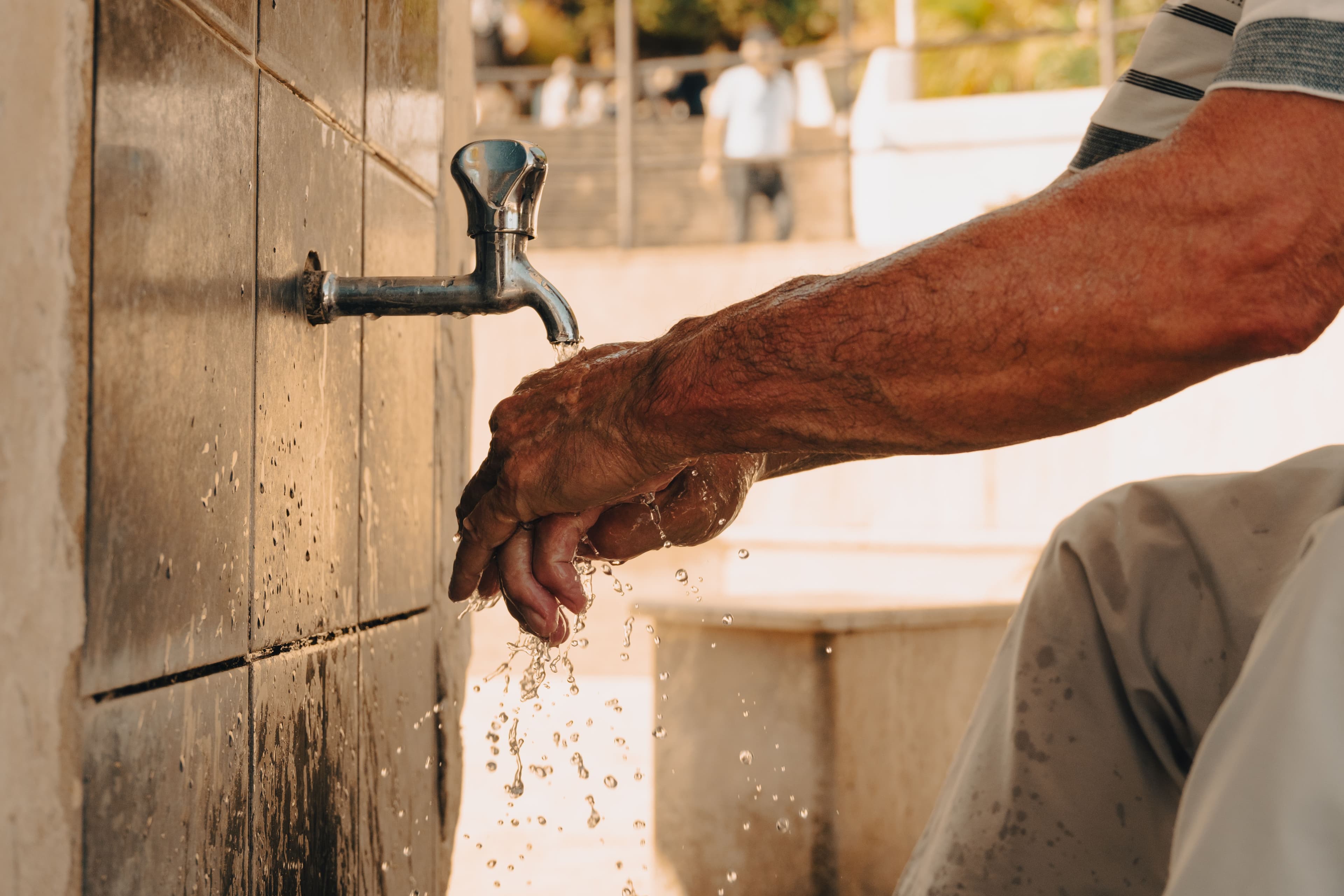
How to Perform Wudu (Ablution): Complete Step-by-Step Guide
Wudu is the ritual washing that prepares a Muslim for Salah and for touching the mushaf in the usual manner. The Quran describes it in Surat al-Ma’idah. This page stays with that general method. Small differences in order or extra recommended acts exist among schools; a teacher can show you the practice you will follow.
What wudu is
Wudu is the ritual washing that prepares a Muslim for Salah and, in the usual manner, for touching the mushaf. Allah describes it in Surat al-Ma’idah (Quran 5:6): washing the face, the arms to the elbows, wiping the head, and washing the feet to the ankles.
Muslims perform wudu so they can stand for prayer in a state of purification. It is not a substitute for ghusl when ghusl is required. This page is a practical beginner guide, not a personal ruling.
Minor details may differ between schools of Islamic jurisprudence. This guide presents a commonly taught Sunni method. For personal fiqh questions, consult a qualified scholar.
Before starting
Make sure water is available and suitable for purification.
Remove anything that prevents water from reaching the required areas, such as thick covering on the nails if those parts must be washed.
Have the intention in the heart. Do not invent a special long Arabic “starting dua” for every wash.
Bismillah before wudu
Mentioning Allah’s name at the start of wudu is commonly taught. Scholars differ on whether it is required or recommended. Do not treat a disputed issue as unanimously obligatory.
بِسْمِ اللهِ
Bismillāh
English: In the name of Allah.
اردو: اللہ کے نام سے۔
Mentioning Allah’s name at the beginning of wudu is reported in the Sunan. There is scholarly discussion about the legal status of that report.
Step-by-step wudu
Where a number of repetitions is mentioned, “up to three times” is the commonly taught sunnah practice for washing — not a licence to waste water, and not a claim that every school counts every limb in exactly the same way.
1. Intention
Intend in the heart that you are making wudu for purification and worship. A long spoken Arabic formula is not required.
2. Say Bismillah
Begin by mentioning Allah’s name, as commonly taught.
3. Wash both hands
Wash the hands, including between the fingers. Water should reach the skin. The commonly taught sunnah practice is up to three times. Do not waste water.
4. Rinse the mouth
Rinse the mouth so water moves around inside it. This is widely practised in a complete wudu. Commonly done up to three times.
5. Clean and rinse the nose
Draw water into the nostrils and blow it out gently, as commonly taught. Up to three times.
6. Wash the face
Wash the whole face: from the hairline to the chin, and from ear to ear, so that no dry patch remains. Commonly up to three times.
7. Wash the right arm including the elbow
Wash from the fingertips up to and including the elbow. Water must reach the skin. Commonly up to three times.
8. Wash the left arm including the elbow
The same as the right arm, including the elbow.
9. Wipe the head
Wipe the head with wet hands. A commonly taught method is to wipe from the front of the head to the back and return. Wiping is not washing. Details of how much of the head must be wiped differ between schools; do not treat one disputed measure as universally mandatory.
10. Wipe the ears
In common practice the ears are wiped with the remaining wetness after wiping the head. Schools discuss whether this is part of the head-wipe. Follow your teacher for the precise method.
11. Wash the right foot including the ankle
Wash the foot up to and including the ankle, including between the toes. Do not leave the heel or ankle dry. Commonly up to three times.
12. Wash the left foot including the ankle
The same as the right foot, including the ankle.
Dua after wudu
After finishing, you may look toward the sky if that is your teacher’s method, and recite the testimony. There is no reliable basis for a different special dua at every individual washing step.
After completing wudu
The testimony after wudu is reported in Sahih Muslim. An additional wording is reported in Jamiʿ at-Tirmidhi. Scholars have discussed the strength of that extra chain; both lines are commonly taught together after wudu.
Ashhadu an lā ilāha illallāhu waḥdahū lā sharīka lah, wa ashhadu anna Muḥammadan ʿabduhū wa rasūluh. Allāhumma-jʿalnī minat-tawwābīn, wa-jʿalnī minal-mutaṭahhirīn.
English: I bear witness that there is no god but Allah, alone, without partner, and I bear witness that Muhammad is His servant and Messenger. O Allah, make me among those who repent often, and make me among those who purify themselves.
اردو: میں گواہی دیتا ہوں کہ اللہ کے سوا کوئی معبود نہیں، وہ اکیلا ہے، اس کا کوئی شریک نہیں، اور میں گواہی دیتا ہوں کہ محمد اس کے بندے اور رسول ہیں۔ اے اللہ! مجھے بار بار توبہ کرنے والوں میں سے بنا، اور مجھے پاک رہنے والوں میں سے بنا۔
Testimony after wudu: Sahih Muslim (Book of Purification). Additional wording: Jamiʿ at-Tirmidhi 55.
You are then ready for Salah if the prayer time has begun. Related remembrances are also on Daily Duas.
When a new wudu is typically needed
Passing urine, stool, or wind; deep sleep; and other states taught by scholars typically require a new wudu. Lists differ slightly by school. If you are unsure after using the toilet, after sleep, or after a medical issue, ask a teacher rather than remaining anxious.
Tayammum (dry ablution with clean earth) is a concession when water cannot be used. Learn it from a teacher if you need it; this page does not replace that instruction.
Common wudu mistakes
Leaving dry spots on the face, arms, or feet.
Not washing the elbows properly.
Not washing the ankles properly.
Rushing so the water never actually covers the limb.
Wiping instead of washing where washing is required.
Forgetting parts of the face, such as the sides or the chin.
Using far more water than needed.
Assuming a special dua must be recited at every individual washing step without reliable evidence.
Important notes
Tayammum (dry ablution with clean earth) is a concession when water cannot be used. Learn it from a teacher if you need it; this page does not replace that instruction.
See the Salah guide for how wudu fits the prayer.
This page is provided for general Islamic education and learning. Minor details of worship may differ between schools of Islamic jurisprudence. For personal or complex religious questions, please consult a qualified scholar.