
Hajj & Umrah
Hajj is the major pilgrimage to Makkah in Dhul-Hijjah, required once in a lifetime for those who are able. Umrah is a lesser pilgrimage that can be made at other times of the year. Both are worship, not tourism. This page names the main rites so you can recognise them. A group leader or scholar should still teach your actual itinerary.
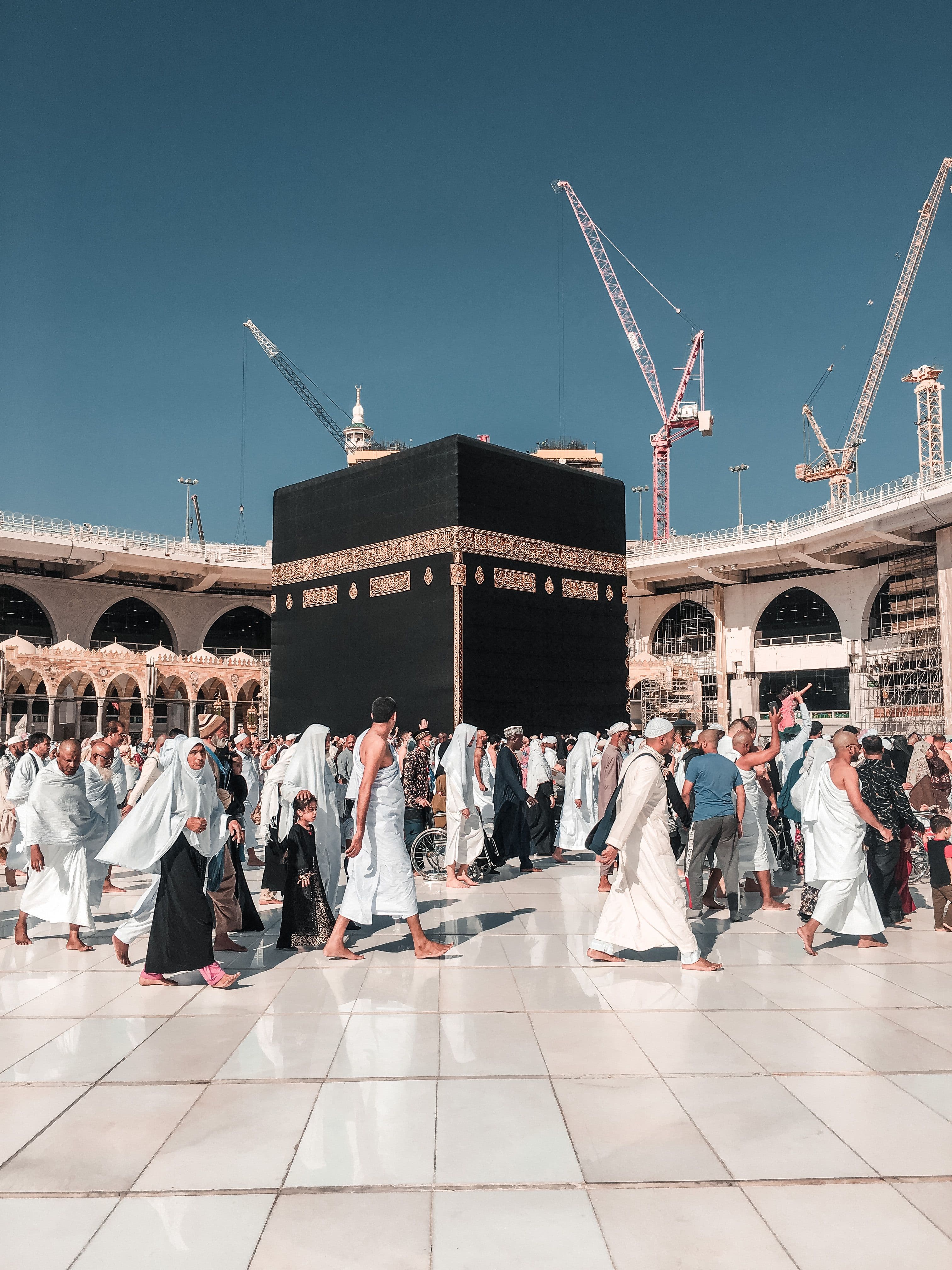
What Hajj is
Hajj includes ihram, standing at Arafah, tawaf, sa‘i, and other rites in and around Makkah in specified days. It is a pillar of Islam for those who can reach it with health and lawful provision.
What Umrah is
Umrah includes ihram, tawaf around the Ka‘bah, sa‘i between Safa and Marwah, and cutting or shortening the hair. It does not include the standing at Arafah that belongs to Hajj.
How they differ
- Hajj has fixed dates in Dhul-Hijjah; Umrah does not.
- Hajj includes Arafah (and related stops such as Muzdalifah and Mina in the Hajj programme); Umrah does not.
- Both share ihram, tawaf, and sa‘i as core ideas.
Ihram
Ihram is the state of pilgrimage: a specific intention and, for men, the two unstitched cloths. Certain actions are avoided until the rites allow exit from ihram (cutting hair, and other restrictions your guide will list). Women wear ordinary modest clothes; they still enter the state of ihram.
Tawaf and sa‘i
Tawaf is circling the Ka‘bah seven times. Sa‘i is walking seven times between the hills of Safa and Marwah, remembering Hajar’s search for water. These acts have a set manner; follow the people of knowledge with you rather than improvising from a phone video.
Arafah, Muzdalifah, and Mina (Hajj)
The standing at Arafah on the 9th of Dhul-Hijjah is the heart of Hajj. Pilgrims then move according to the prescribed sequence, which includes Muzdalifah and Mina, with stone-throwing at the jamarat as taught in the Hajj days. Exact timings and concessions for crowds or weakness should come from your group’s scholars — not from this summary.
Preparation
Learn wudu and Salah well before you travel. Sort documents, health, and mahram/travel rules that apply to you. Memorise short duas you already know (see Daily Duas). Intention and patience matter more than collecting unsourced “must-read” lists online.
Important notes
- Schools of law differ on some Hajj details. Your official Hajj/Umrah guide is the place for those questions.
- This page is not a visa, medical, or legal guide.
- This page is provided for general Islamic education and learning. Minor details of worship may differ between schools of Islamic jurisprudence. For personal or complex religious questions, please consult a qualified scholar.
Explore Islamic Education
Learn with a teacher
Reading a guide is a start. Live one-to-one classes help with pronunciation, questions, and a method you can keep.
Want guided Islamic learning?
Book a free trial for one-to-one Quran and Islamic studies with a real teacher — including a female teacher for sisters.