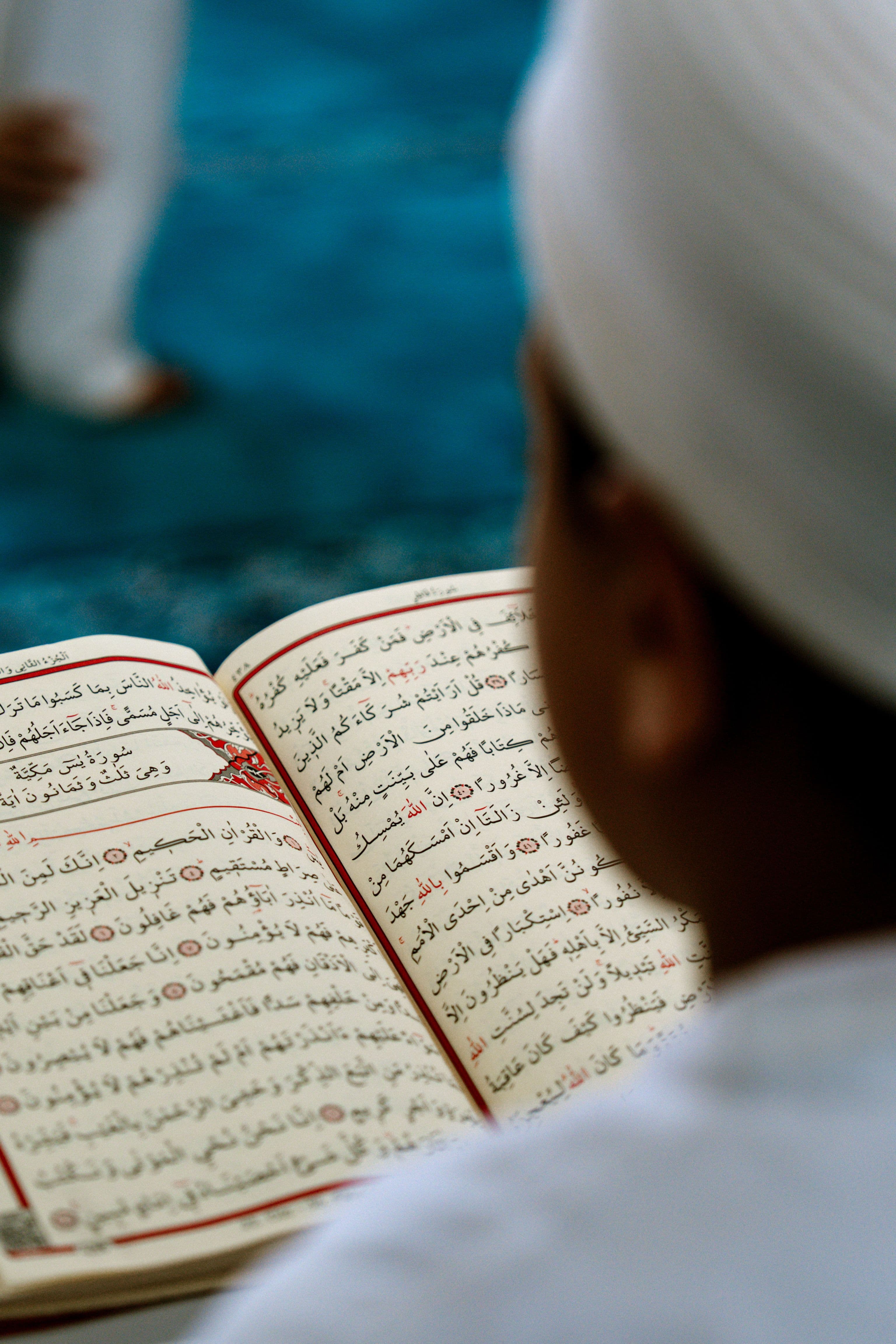
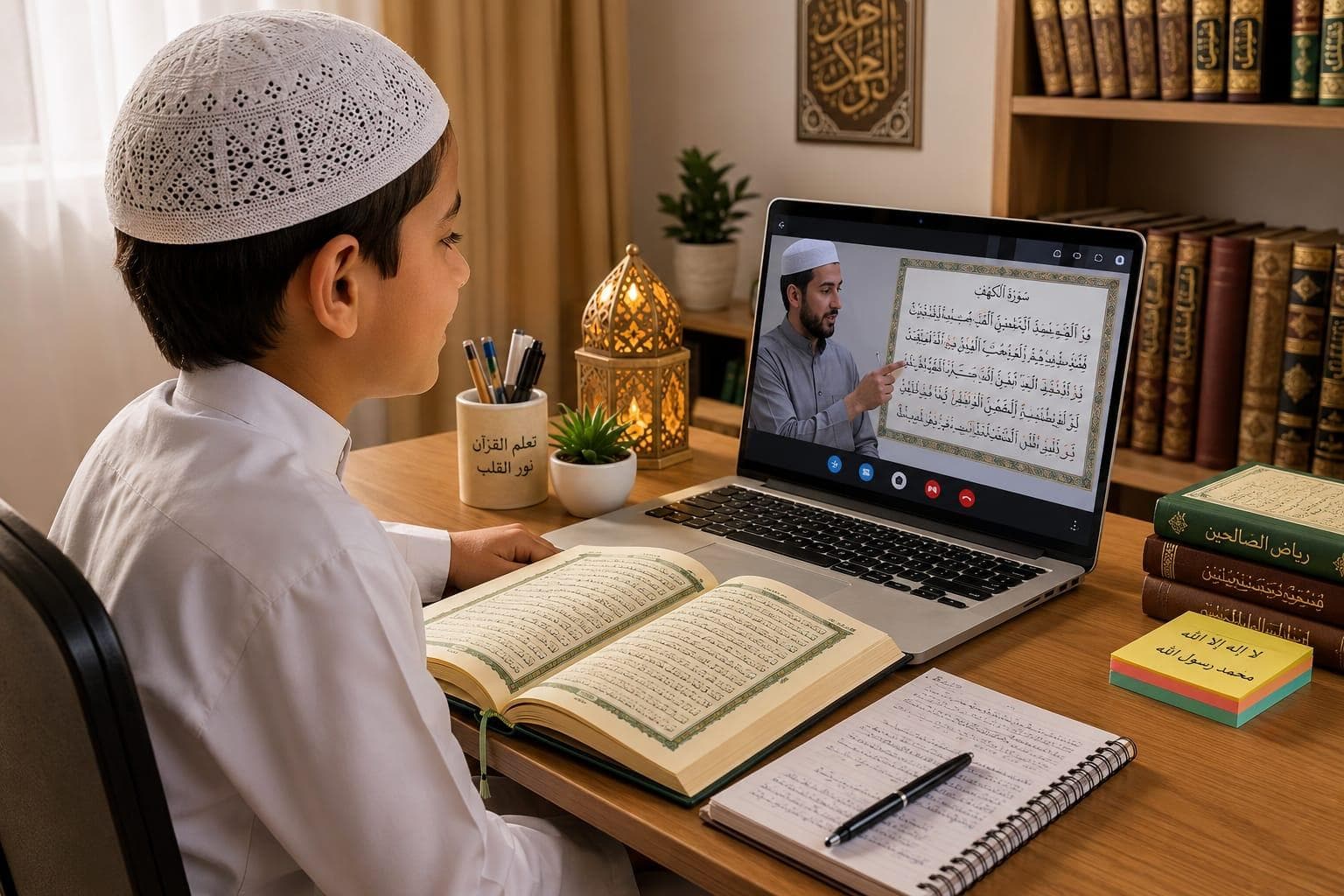
Quran Translation vs Tafsir: What Is the Difference?
Translation conveys meaning in another language. Tafsir explains the passage. How they differ, and how a beginner can use both without treating a first reading as interpretation.
19 September 2026 · 11 min read · Fahm-ul-Quran Online Quran Academy
A beginner often meets two books at once. One is labelled a translation: English or Urdu beside the Arabic line. The other is labelled Tafsir. The titles sit on the same table. The jobs are not the same. A common question follows: is Tafsir just another translation — a longer, more wordy one?
No. Translation and Tafsir serve different purposes. A translation tries to carry the meaning of the Arabic text into another language. Tafsir explains and interprets a passage, using language, context, and methods that qualified scholarship has developed for that work. One gives access. The other gives explanation. They can sit beside each other. They are not interchangeable labels.
What “understanding the Quran” means as a phrase is in What Is Fahm ul Quran?. How a beginner can practise a daily study method is in how to learn Quran with meaning. How to work through a verse when you do not know Arabic is in understand Quran verses without knowing Arabic. A practical sit-down study sequence is in how to study the Quran for beginners. This page stays with the difference itself.
What Is a Quran Translation?
A Quran translation is a rendering of the Arabic text into another language so a reader who does not work in Arabic can follow the general sense of a passage. It exists because most learners do not wait for fluency before they want to know what a short surah is about.
Translations are written in many languages for the same reason any important text is translated: the original language is not the reader’s language. English and Urdu editions are tools of access. Neither language is religiously superior. The Quranic text remains Arabic.
Translation communicates meaning by choosing words and sentence shapes in the target language. That always involves choices. Arabic words can carry a range of senses. Word order, emphasis, and roots do not map one-to-one onto English or Urdu. Two careful translators can therefore use different wording for the same verse without either producing a “wrong Quran.”
No translation is universally perfect. Some lean toward more literal wording. Some lean toward easier reading. Some add brief notes. Those are trade-offs, not a ranking. A translation you will actually finish is more useful than an edition you never open.
What Is Tafsir?
Tafsir is explanation. In ordinary educational use, it is the work of clarifying what a Quranic passage is saying and how it has been understood — not merely restating it in another language at greater length.
A Tafsir may discuss the language of a verse, how it sits next to the verses around it, background that helps the passage, and — where that is established — relevant Prophetic explanation. It can also record how qualified scholars have read a difficulty. Not every Tafsir does all of this on every line. Works differ in depth, audience, and method. That is expected.
Tafsir is not “a longer translation.” A translation answers: what does this say in a language I can read? Tafsir answers: how is this passage explained? A beginner does not need a multi-volume set to start. A short, recognised explanation of a difficult line is still Tafsir at a beginner’s scale. What Tafsir is as a discipline — why it exists, what it considers, and how to start — is in What Is Quranic Tafsir? A Beginner’s Guide.
Quran Translation vs Tafsir: The Main Difference
The table below is a comparison of typical purposes. Individual books vary. Some translations include notes. Some Tafsir works are brief. The distinction is still the job each tool is built to do.
| Aspect | Translation | Tafsir |
|---|---|---|
| Main purpose | Convey meaning in another language | Explain and interpret the passage |
| Typical length | Usually concise — often close to the verse | Often more detailed — a note, a page, or more |
| Context | May be limited or left to a short footnote | Can provide broader context where it helps |
| Language | Renders Arabic meaning into the reader’s language | Can explain linguistic features the rendering flattened |
| Scholarly discussion | Usually limited | Can include scholarly explanation and disagreement |
| Beginner use | Helpful for starting to follow the sense | Helpful when the sense needs explanation |
If you only need the general meaning of a short, clear passage, a reliable translation may be enough for that sitting. If the line is legal, disputed, historically situated, or simply confusing, Tafsir is the tool built for that work.
Is a Quran Translation the Same as the Quran?
No. The Quran is the Arabic text. A translation is a rendering of that text’s meaning in another language. The two are related. They are not identical objects.
That distinction is educational, not a slight on translations. A careful English or Urdu rendering is a genuine aid. It still cannot carry every shade of the Arabic — rhythm, word order, a root that fans into several English words. Treating the translation as the original is how a wording choice gets mistaken for the only possible sense.
Reciting the Arabic is reading the Quran. Reading a translation is learning meaning through another language. Both can belong in a study session. They should not be collapsed into one name.
Why Can Two Quran Translations Use Different Words?
Languages do not line up word for word. An Arabic term may have a range of senses; the translator must pick a word that fits this verse, this sentence, this context. Sentence structure also changes. What is elegant in Arabic may need a longer English clause, or a shorter Urdu one.
Translators then make stylistic choices: more literal, more readable, more note-heavy. Those choices accumulate. Two reputable editions of the same verse can therefore differ in tone without being a contradiction in the Quran itself. The difference is often a signal to slow down — and, if the gap matters, to look at Tafsir — not a reason to distrust every translation.
A generic pattern, not a verse: one edition may say “mercy,” another “compassion,” for a word that can carry both. Neither word is invented. Neither is the whole Arabic. That is translation working as translation.
Why Is Tafsir Useful for Understanding the Quran?
Tafsir is useful when a translation leaves a real question. Context can show why a passage follows the one before it. Vocabulary notes can stop one English word from being stretched too far. Connections between verses can prevent an isolated reading. Background — when it is established — can explain a name or a situation a first-time reader has never met.
Not every verse needs an extensive Tafsir before it can be understood at all. Many short passages are already plain in a careful translation: a command to be honest, a reminder of prayer, a story a child already knows. Tafsir is not a toll booth on every line. It is the right tool when the line is not enough.
Translation, Tafsir, Reflection and Personal Interpretation
These four words get used as if they were synonyms. They are not.
Translation
Communicating meaning in another language. The output is a rendering, not a commentary.
Tafsir
Scholarly explanation and interpretation of a passage, using the methods and sources that work is built on. It is not a first impression.
Reflection
Thinking about lessons and personal relevance after the meaning is clear enough to think about. Reflection can be valuable. It stays attached to what the passage actually said.
Personal interpretation
An individual’s conclusion about what a passage means. That conclusion may be careful or hasty. It does not become authoritative Tafsir because it felt sincere. Clear, well-known meanings can be learned by ordinary students. Difficult, legal, or disputed verses need reliable explanation — not a private verdict issued for other people.
Personal reflection can sit next to study. Personal assumptions should not be presented as the Quran’s official meaning.
Should Beginners Read Translation or Tafsir First?
A practical order, not a religious requirement:
- Read the Arabic if you can follow the line.
- Read a reliable translation of the same short passage.
- Note unfamiliar words or ideas.
- Use a short explanation where the sense is not clear.
- Open Tafsir when more context is actually needed.
- Ask a qualified teacher or scholar about questions you should not settle from a comment thread.
Depth depends on the learner. Someone still building letters should not be given a dense commentary. Someone who already recites fluently may need explanation more than another alphabet tour. If reading itself is still the problem, how to read the Quran correctly is the earlier page.
How to Study the Quran Using Translation and Tafsir
A suggested educational method — not a mandated routine, and not a replacement for the fuller practice guide linked above.
Step 1 — Choose a manageable passage
A few verses, or one short surah you already know by sound.
Step 2 — Read the Arabic if you can
Keep the original line in view. If you cannot yet read it, listen to a careful recitation of that same short passage.
Step 3 — Read the translation carefully
State the general sense in one or two plain sentences.
Step 4 — Identify unfamiliar concepts
Write down a name, a word, or a question — not a poster of two hundred roots.
Step 5 — Read relevant Tafsir or explanation
Only where those sentences failed, or where the topic is technical.
Step 6 — Write down key points
What the passage is about. What remains a question.
Step 7 — Reflect on the lessons
Sit with what you actually understood. Do not invent a hidden meaning to fill a gap.
Step 8 — Review later
Return to the same passage. New pages without review become a blur of half-remembered morals.
Can I Understand the Quran Without Knowing Arabic?
You can begin. A reliable translation opens meaning in a language you already read. Arabic study deepens that start: vocabulary, grammar, and features a rendering has to flatten. Quranic Arabic can be learned gradually beside the passages you already study — the sequence is in how to start understanding Quranic words. Fluency is not an entrance ticket.
A translation should still not be treated as identical to the Arabic original. Difficult interpretive questions belong with qualified guidance. Reading, Tajweed, Fahm-ul-Quran, and Islamic studies sit beside the mushaf; none of them turns a first gloss into Tafsir.
How to Choose a Reliable Translation or Tafsir
There is no honest universal “best” edition for every reader. Use criteria.
For a translation
- A known translator or publisher, not an anonymous paragraph
- Clarity you can follow without decoding the English or Urdu
- A register you will actually finish
- Notes that help when stuck, without replacing the verse
- One main edition you stay with, so key words feel familiar
For a Tafsir
- A work with a recognised scholarly standing
- A method you (or your teacher) can name, not a viral thread
- An audience match — beginner notes are not a research set
- A language you can read without a second translation of the Tafsir
- Suitability for the questions you actually have
Ask a teacher or a trusted institution which edition fits your level. Do not collect five apps before you have finished one page.
Common Mistakes Beginners Make
These are practical errors, not a moral ranking.
- Treating a translation as a word-for-word equivalent in every case.
- Assuming different translations are necessarily contradictory.
- Reading isolated passages with no surrounding verses.
- Confusing reflection with authoritative Tafsir.
- Taking a difficult line out of context and building a ruling.
- Using random social-media explanations as if they were established commentary.
- Jumping between too many resources in the same week.
- Assuming every personal interpretation is equally valid.
- Avoiding qualified guidance when a difficult question appears.
How Much Tafsir Should a Beginner Study?
There is no universal amount and no required number of volumes.
Light approach
A reliable translation plus a short explanation only where the sense fails.
Moderate approach
Translation plus selected Tafsir notes on the week’s passage.
Deeper approach
Structured Tafsir study with a teacher or scholar who can hear the question. Background and goals decide the depth — not a sales page.
Learning Quran with Meaning in English or Urdu
Use the language you think in. English learners can use an English translation, English explanatory notes, and — when it helps — a teacher who can explain in English without leaving the Arabic line. Urdu learners can do the same in Urdu. One language is not a higher religious path. Households that use both should pick one as the main study language so vocabulary does not split every session.
Translation vs Tafsir: Which One Should You Use?
Neither wins. They do different work.
Translation gives a beginner basic access to meaning. Tafsir gives deeper explanation when that access is not enough. Used together — a short passage, a clear rendering, then explanation where needed — they complement each other. Used as rivals, one gets dropped and the gap shows up later.
That is the whole search: not “which book replaces the other,” but which job you are doing in this sitting.
When Should You Ask a Quran Teacher or Scholar?
You can open a translation tonight without a class. A teacher or scholar becomes useful when the question is larger than a first rendering:
- a difficult or disputed interpretation
- unfamiliar terminology that will not stay put
- context you cannot check yourself
- two explanations that seem to conflict
- a wish to study Tafsir in a structured way
- an Arabic linguistic point a footnote cannot settle
- a religious ruling someone wants to draw from a verse
Not every online teacher is a scholar of Tafsir. Teaching recitation and explaining a beginner passage are different skills. Online Quran classes for beginners and how to learn Quran online describe live class format. They do not turn every instructor into a mufassir. Adults returning to study can start from learning the Quran from scratch as an adult if the script itself is still the first problem.
Structured Support While You Learn Reading and Meaning
If you want someone who can hear the recitation and tell you whether a difficulty is vocabulary, translation, or a point that needs explanation, a live class can hold that distinction. Enrolment does not produce understanding by itself.
Fahm-ul-Quran Online Academy is a Pakistan-based online Quran school. Its public journey is dated from 2012. Live one-to-one classes run Monday to Friday, thirty minutes, on WhatsApp, Zoom, or Skype. Students can work on Quran reading, Tajweed, and Islamic studies — core beliefs, seerah, and daily practice — beside the mushaf. Learners who want guided meaning work can join the online Fahm-ul-Quran course, taught live in Urdu. A female teacher is available. The academy does not currently offer a named Tafsir-certificate track, and it does not offer certificates.
If you want to see whether a live slot fits, request a free 3-day trial: thirty-minute one-to-one classes, completely free, reviewed by the team. Submitting the form is not instant enrolment. Bring a short passage and the question the translation left open. The useful first outcome is a clearer job for each book on the table.