Online Quran Classes for Kids and Adults: A Complete Beginner's Guide
How live one-to-one online Quran classes work, who they suit, what students learn, and what to consider before you request a trial.
8 September 2026 · 12 min read · Fahm-ul-Quran Online Quran Academy
Families look at online Quran classes for a simple reason: they want regular, guided recitation without needing a classroom nearby. The question is rarely “does the internet exist?” It is whether a live lesson on a screen can still be personal — especially for a child who fidgets, a teenager with school hours, or an adult who has not opened a Qaida in years.
This guide explains how online Quran classes work in practice, who they suit, what students actually learn, and what to check before you commit. What a beginner should learn first — letters, a primer, Quran reading, then Tajweed — is a separate first-step question in online Quran classes for beginners. Where Fahm-ul-Quran Online Quran Academy is mentioned, the details are limited to how this academy teaches: one-to-one live classes, Monday to Friday, flexible timings, and a 3-day free trial of 30-minute lessons. Choosing a child's overall program — level, curriculum, schedule, trial — is in online Quran classes for kids.
What Are Online Quran Classes?
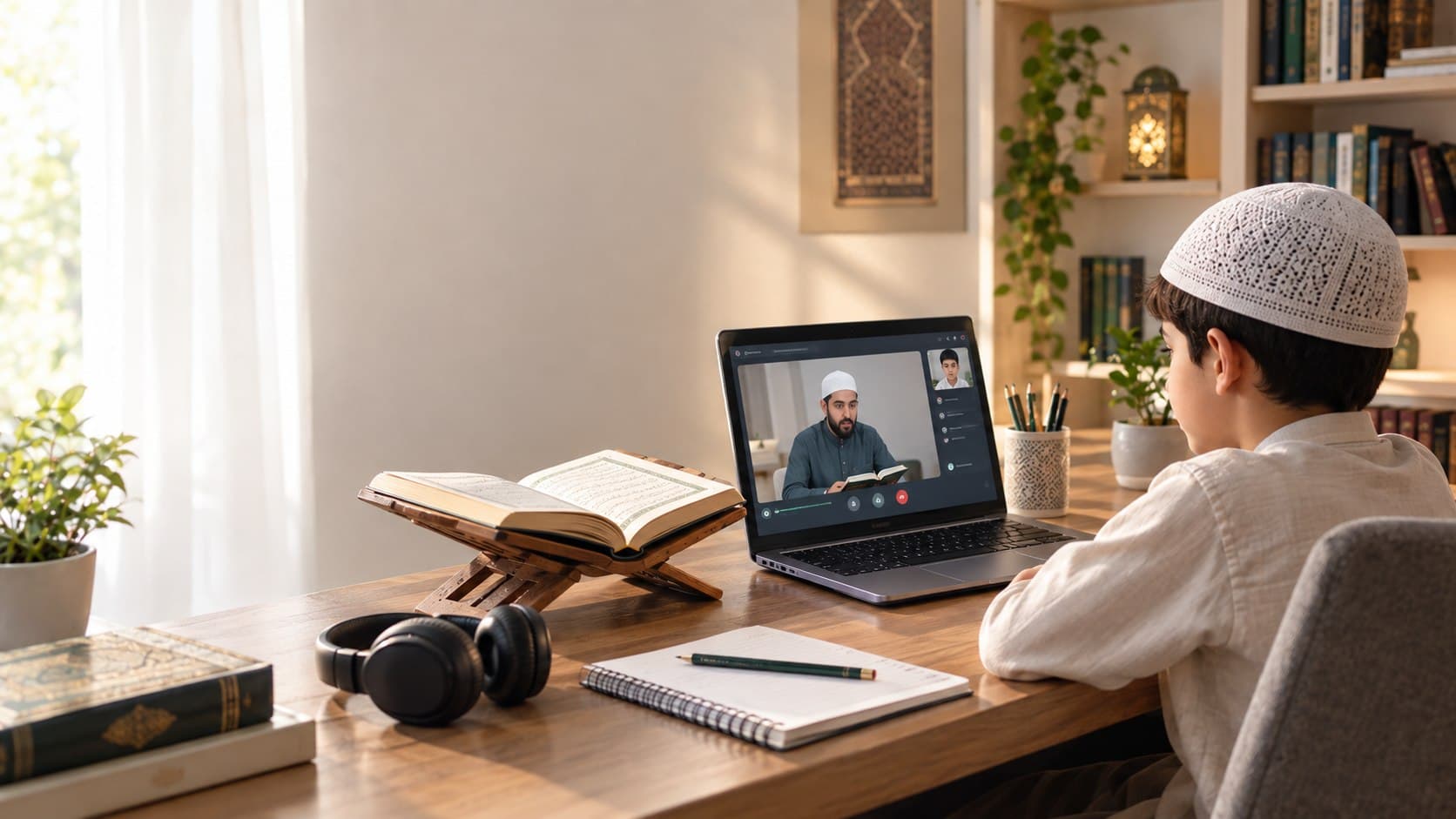
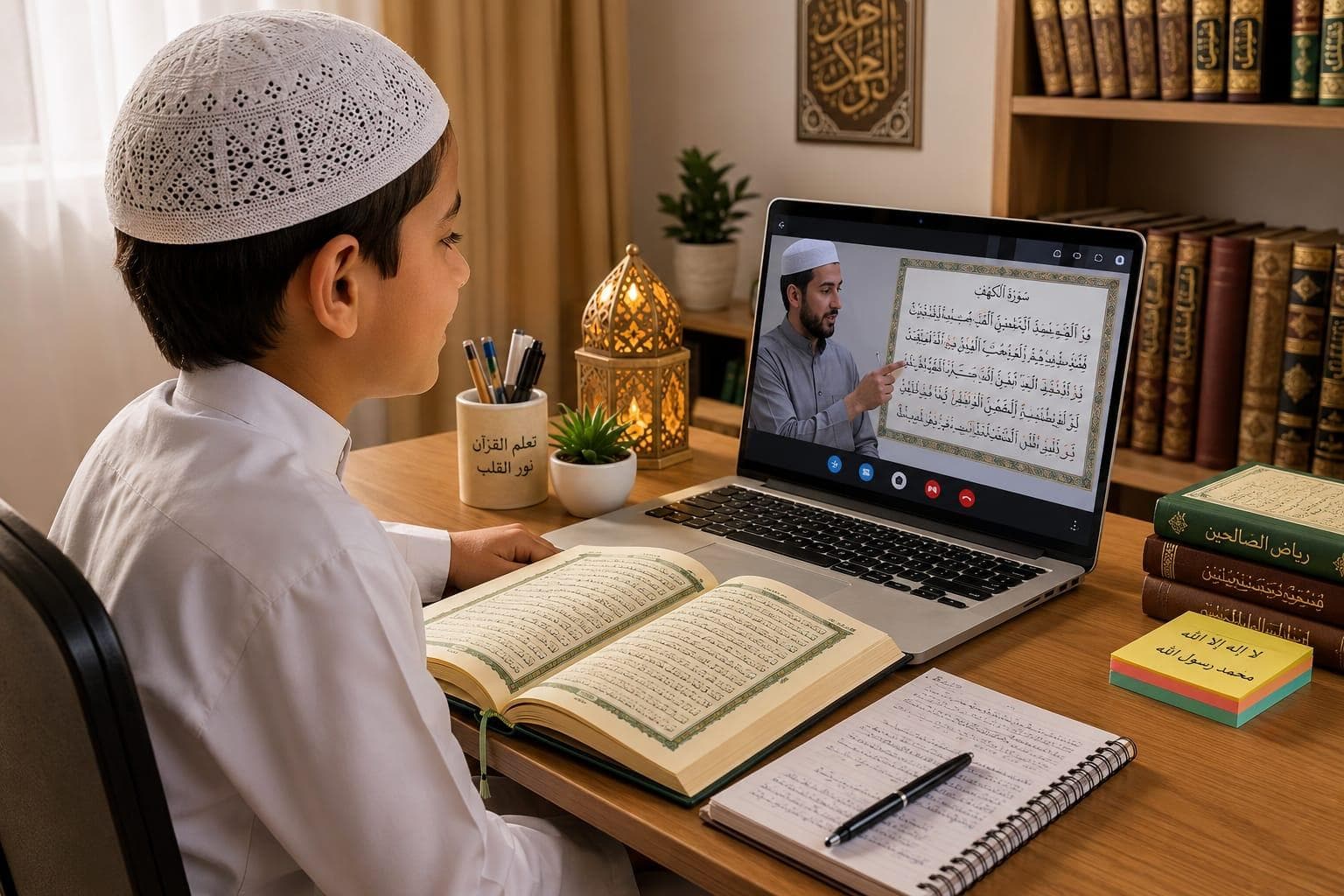
An online Quran class is a live lesson between a student and a teacher, held over a video or voice call. The student recites. The teacher listens, corrects, and sets the next small piece of work. That is the whole engine. Recorded videos can introduce a rule; they cannot hear whether you merged two letters or skipped a vowel.
At Fahm-ul-Quran, classes are one-to-one and live. The academy is Pakistan-based; its online journey began in 2012. Lessons currently run on WhatsApp, Zoom, or Skype — no single platform is required. You need a reliable connection and a phone, laptop, or tablet.
You can browse the full course list if you already know the path you want. If you do not, the sections below will help you choose a starting point. The request-to-first-lesson sequence is on how it works.
Live classes and recorded lessons
A recording can show a letter shape. A live class can stop you on the second letter and ask you to try again. If the session is only a video the student watches, it is study material, not a class. Both can be useful. They are not the same thing. This academy teaches live; it does not claim that every recorded course elsewhere is useless.
Who Can Learn Quran Online?
Almost anyone who can sit for a short lesson and hear a teacher can learn this way: children, teenagers, adults, and sisters. Age matters less than honesty about the starting point. A parent who never learned letters and a child opening a Qaida for the first time are both beginners, even if their attention spans differ. How women can arrange the learning itself — path, hours, comfort — is in online Quran classes for women.
What usually does not work is treating the class as background noise — camera off, Quran closed, hoping the teacher will “cover a page.” A useful online lesson is still a lesson: the student recites out loud and accepts correction.
| Learner | What usually helps | Common friction |
|---|---|---|
| Children | Short lessons, a warm teacher, a parent nearby at first | Fidgeting, tiredness after school, skipping letters to please an adult |
| Teenagers | Privacy, starting from the real level, small checkable homework | Embarrassment about gaps, school competing for the same hour |
| Adults | An honest first page, a weekday slot that actually exists | Shame about beginning again, practising only inside the lesson |
What a Typical 30-Minute Class Looks Like
Formats vary by teacher and by student, but a useful half-hour is rarely a lecture. It usually looks like this:
- A short review of what was assigned last time — the student recites; the teacher listens.
- Correction on the sounds or words that still slip, not a new chapter dumped on top of yesterday’s confusion.
- A small amount of new work, only if the review is holding.
- A clear next step for home: which line, how many times, what to watch for.
Thirty minutes is long enough to hear a child or an adult properly. It is short enough that most families can keep the slot. If the connection drops, say so and repeat the last word rather than nodding through a lesson you did not hear.
Online Quran Classes for Children
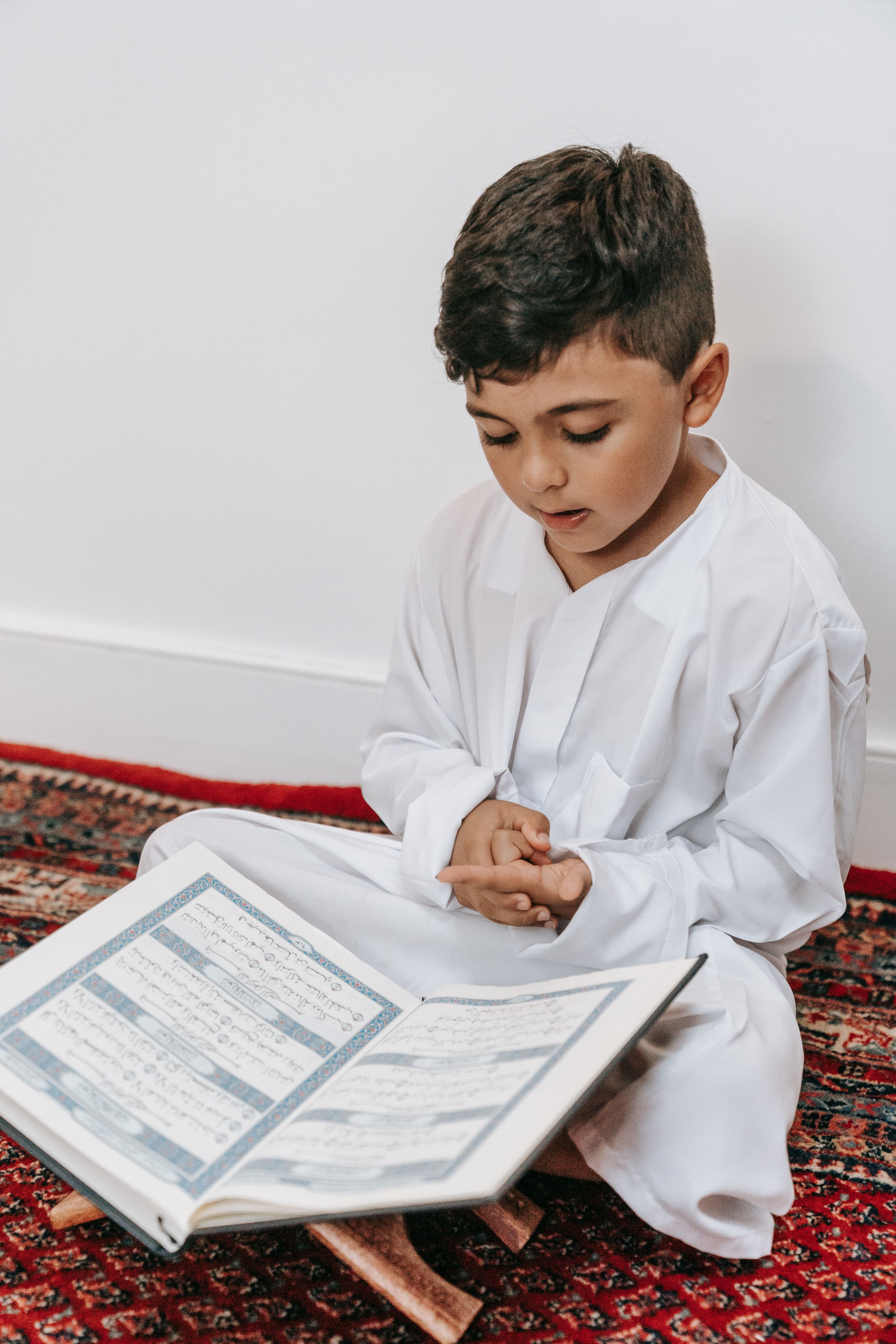
Children do well online when the teacher keeps the lesson short, warm, and specific. Thirty minutes is long enough to review yesterday’s letters and add a little more, and short enough that most children can stay with it. A parent nearby for the first few sessions helps with sitting still, finding the page, and repeating the homework later.
The Quran for Kids path is built around that pacing. Many children begin with Noorani Qaida so letter sounds are planted before they meet a full page of the Quran. What they should not be asked to do is memorize long portions while still guessing at the text.
A female Quran teacher is available if a family prefers that for a daughter. You can state a preference when you request a trial; it is a choice, not something that has to be “arranged later.” How to sit beside the camera without taking over the class is covered separately in how parents can support a child’s online Quran lessons.
Online Quran Classes for Teenagers
Teenagers often already know some reading and feel embarrassed about the gaps. One-to-one classes help here: there is no classroom audience, and the teacher can start from the actual level instead of a grade label. Homework has to compete with school, so it should be small and checkable — a page to revise, not a vague “practise more.”
If the teenager can already read, Quran Reading (Nazra) is usually the next step. If letters still collapse under speed, return to Qaida without treating it as a demotion. Fluency built on unclear sounds is only fast guessing.
Online Quran Classes for Adults
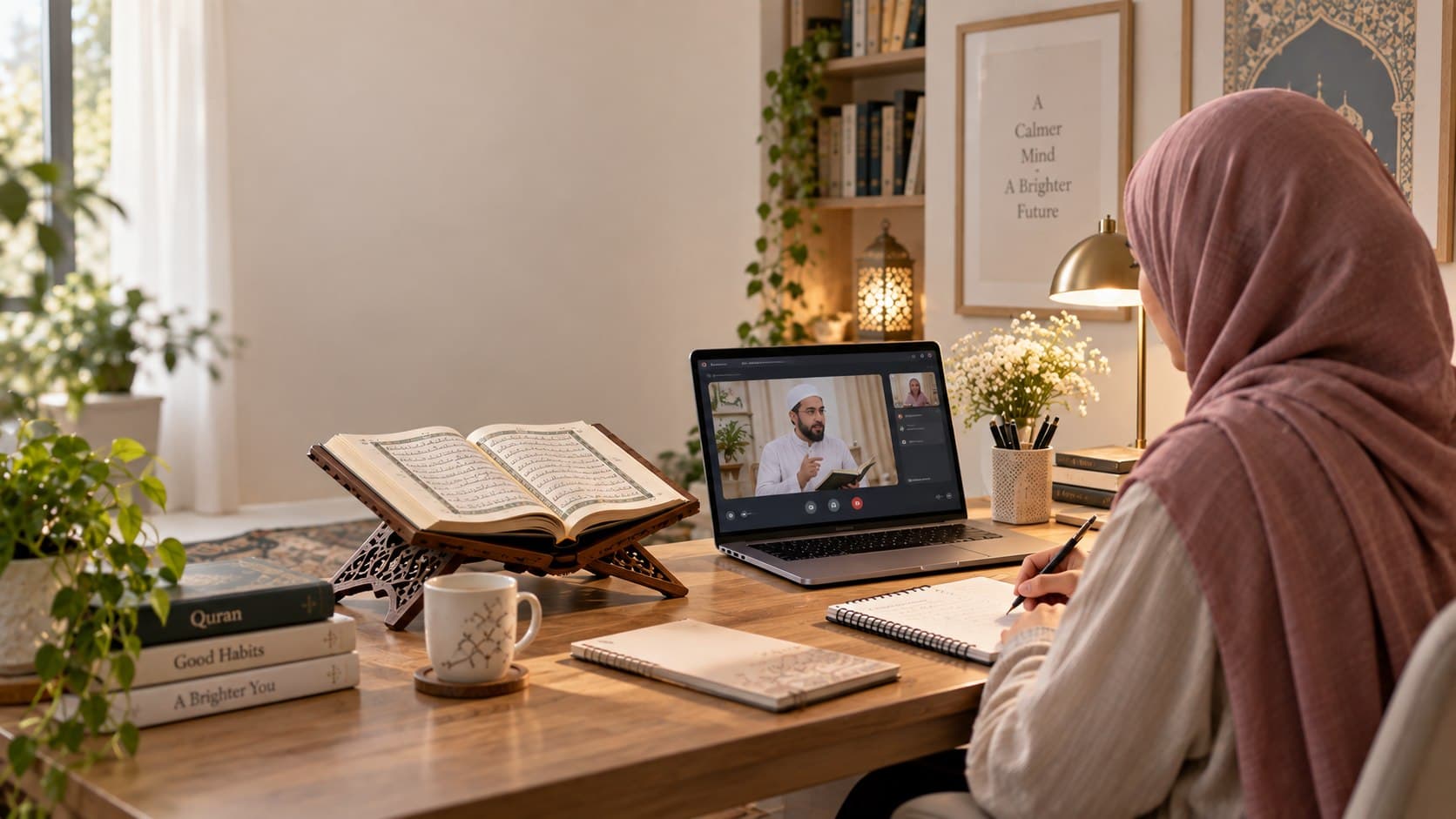
Adults bring two advantages: they chose to be there, and they can describe what feels hard. They also bring tired evenings and the habit of apologizing for “starting late.” A good online teacher ignores the apology and works the page in front of you.
Sisters who want a female teacher can ask for one from the first message, or look at Quran for Sisters. Working adults usually need a consistent weekday slot rather than a heroic weekend plan — and this academy does not offer weekend classes. Flexible timings inside Monday to Friday are the practical lever.
If the real question is “where do I start if I cannot read yet?”, that path is written for adults in how to learn Quran from scratch as an adult. This article stays with how the class itself works.
What Students Can Learn
Online classes can cover the same core path as a local teacher:
- Arabic letters, sounds, and joining (often through Noorani Qaida)
- Reading the Quran with regular correction (Nazra)
- Tajweed applied to actual recitation, not only named rules
- Memorization (Hifz), when reading is strong enough to support it
- Islamic Studies, when a family wants belief, seerah, and practice alongside recitation
Not every student needs every course. A child may stay with Qaida for months. An adult who already reads may go straight to Tajweed. Hifz should wait until the text can be read accurately; otherwise the student memorizes mistakes. The beginner sequence from letters to pages is in how to learn Quran online— use that guide for the learning path, and this one for the class format.
One-to-One vs Group Quran Classes
Group classes can be cheaper and more social. They also mean the teacher hears each student for a slice of the hour. One-to-one time is almost entirely spent on your recitation. For beginners, children, and anyone rebuilding after a long gap, that extra listening is the difference between “we finished a lesson plan” and “you can read this line correctly.”
Fahm-ul-Quran teaches one-to-one only. That is a format choice, not a claim that group classes never help. If you want a teacher who can stop you at the first unclear letter, one-to-one is the simpler design.
Are Online Quran Classes as Effective as In-Person?
They can be, when the class is live, the microphone works, and the student recites. They are weaker when the lesson is a recording, the connection keeps dropping, or nobody at home treats the slot as a real appointment. A local teacher you can sit with is not automatically better or worse. The test is the same in both places: does someone hear you, and do you practise between lessons?
Online learning is a good fit when travel is hard, when a family wants a private one-to-one room, or when weekday timing at home is easier than a commute. It is a poor fit if the house cannot produce thirty quiet minutes, or if the student will not open the book on camera.
What You Need for an Online Quran Class
Keep the list short:
- A quiet enough corner for 30 minutes
- Internet that does not drop every few minutes
- A phone, tablet, or laptop with a working microphone
- A Quran or Qaida the student can see — print or a clear screen
- For younger children, a parent nearby for the first lessons
You do not need studio lighting, a special headset, or a particular brand of device. Headphones help when the house is noisy. A second device to show the page can help, but many students simply tilt the camera toward the book.
How to Choose an Online Quran Teacher
Look for a teacher who listens more than they lecture, who can explain a sound without rushing, and who will tell you when the student is not ready for the next step. Ask how classes are held (live or recorded), whether they are one-to-one, which days are available, and whether you can request a male or female teacher. You can meet the teachers on this site before you decide.
Be wary of numbers that cannot be checked — student counts, country tallies, guaranteed completion times, or a certificate presented as proof of recitation. Fahm-ul-Quran does not issue certificates and does not publish invented ratings. The useful test is a real class. A longer question list is in questions to ask before you choose an online Quran teacher.
What to Expect From a Trial Class
Fahm-ul-Quran offers a completely free 3-day trial. Each class is 30 minutes, live, and one-to-one. You share a few details about the student, including course interest and teacher preference. The form is a request, not instant enrolment. The team aims to respond the same day, then you meet a teacher and decide whether to continue.
A trial is for hearing how the teacher corrects, how the student responds, and whether the time slot is realistic. It is not a promise that a particular teacher is assigned in the first hour, and it is not a booking calendar. If that human pace feels too slow, this academy is probably not the right fit — and it is better to know that before you pay.
Current class frequencies and fees are on the pricing page. There is no admission fee.
When you are ready, request a free trial. If you already know the course, start from courses and use the trial button on that page so the form can preselect it.
Details Families Usually Want Before They Decide
Will my child take the screen seriously?
Many do, once they meet the same teacher each time and the parent treats the slot like a real appointment. The first week is often about routine, not speed.
Can I sit in on my child’s class?
Yes, especially at the start. Stay supportive, not performative — the teacher needs to hear the child, not the parent reciting over them.
What if our time zone is outside Pakistan?
Flexible weekday timings are the tool. Mention your country or time zone on the trial form so the team can look for a workable slot. There is no 24/7 classroom.
How often should we take classes?
Often enough that last week’s letters are still in the ear, and not so often that nobody practises at home. Published plans are priced by how many classes you take each week. Choose a frequency you can keep, then look at those options — not the other way around.
If You Want to Hear How a Real Lesson Feels
Online Quran classes work when they stay close to an old idea: a teacher hears you and you try again. Children, teenagers, and adults can all learn this way if the pace is honest and the lesson is live. Choose a starting course, ask for the teacher preference you actually want, and use a short trial to test the fit — as a request, not as a promise that everything is already booked.