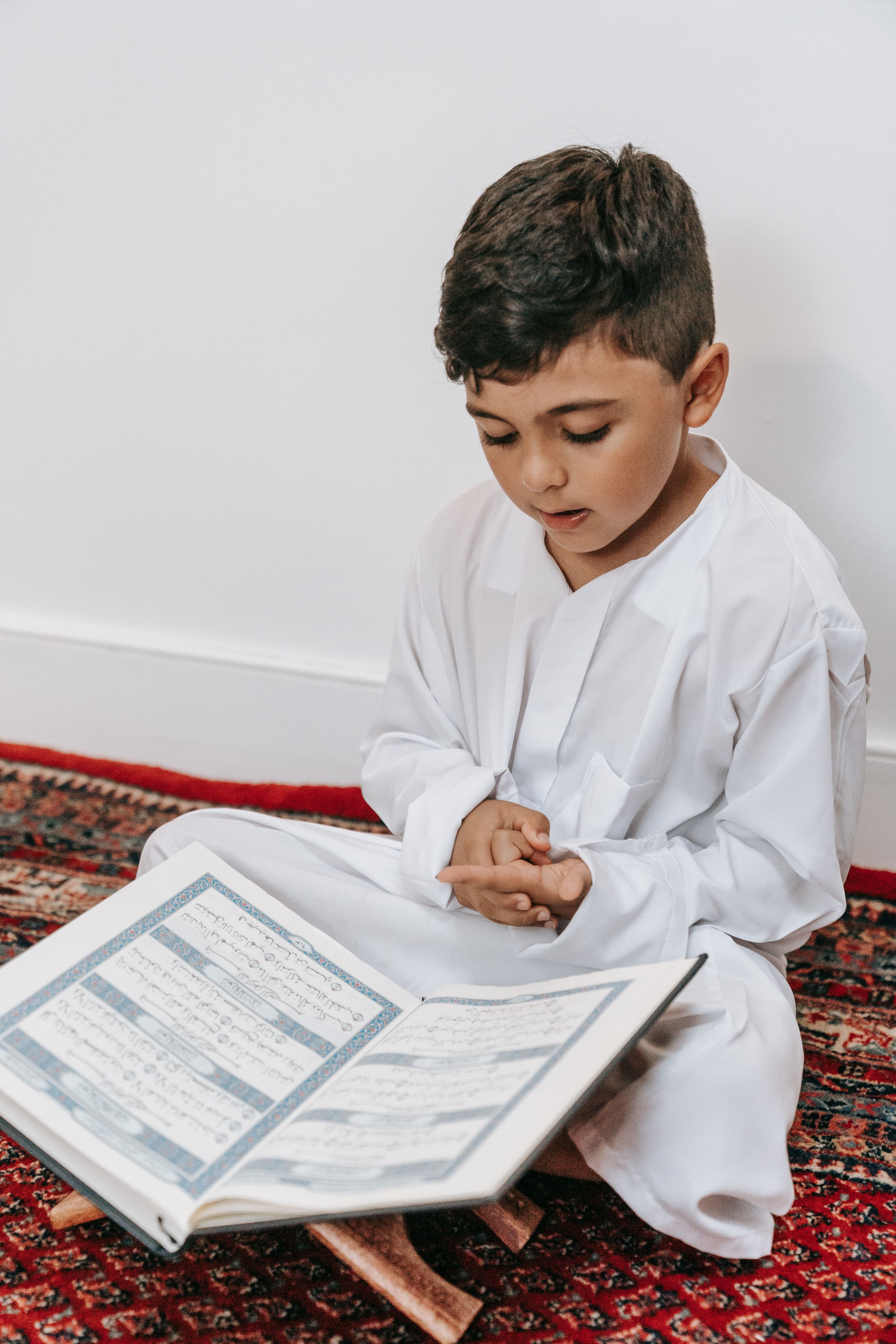
How Parents Can Support a Child's Online Quran Lessons Without Taking Over
Help with the space, the routine, and encouragement — then let the teacher teach. A practical guide for parents of children in live online Quran classes.
8 September 2026 · 9 min read · Fahm-ul-Quran Online Quran Academy
Parents play an important role in a child’s Quran learning journey, especially when lessons take place online. A child may need help preparing the device, remembering the class time, or staying encouraged.
At the same time, children benefit when the teacher has space to teach and build a relationship with the learner. The best approach is usually supportive rather than controlling.
This guide is about how parents can support a child’s online Quran lessons without taking over the class. It is not a weekly routine planner, and it is not a class-format explainer. Those live in how to build a Quran learning routine for your child and how online Quran classes work for kids and adults. Choosing which program belongs to this child is in online Quran classes for kids.
1. Create a Calm Learning Environment
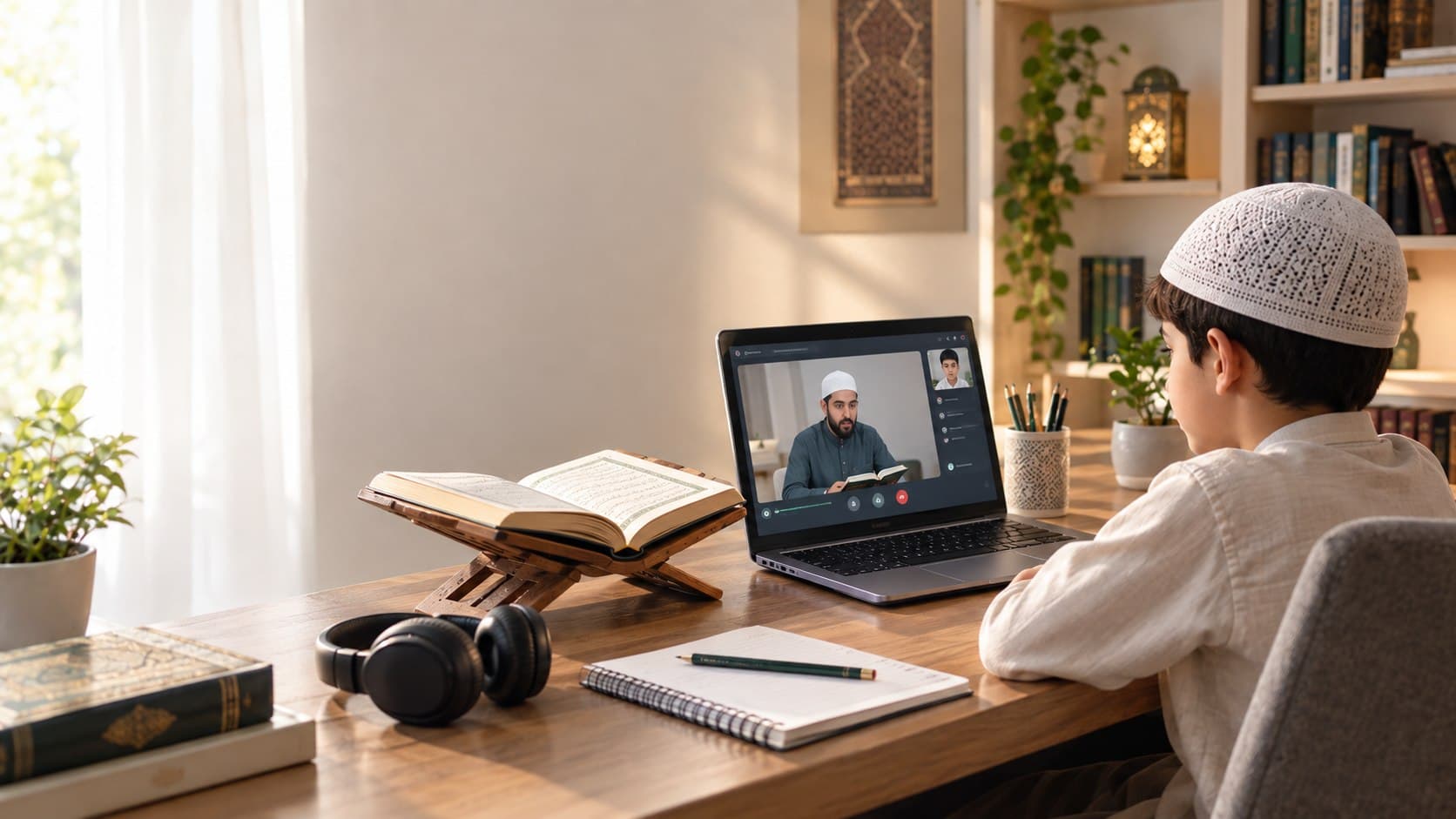
A quiet place, a suitable device, stable internet, comfortable seating, and fewer distractions make online Quran classes for kids easier to follow. The child should be able to see the mushaf or Qaida and hear the teacher without competing noise from the next room.
You do not need a perfect study studio. You do need a setup the child can return to on class days without a scramble. Headphones can help when the house is busy, as long as the teacher can still hear the child clearly.
2. Help Establish a Routine
Parents can help children remember class times and create a predictable learning routine. Knowing when the lesson happens — and having the book ready — reduces last-minute stress.
A fixed routine does not work for every child. Energy, school hours, and family schedules differ. The useful part is predictability where you can manage it, not a timetable copied from another family. How to design that week — class time, short review, rest — is in the kids’ routine guide linked above, not duplicated here.
3. Encourage Without Pressuring
Encouragement helps a child stay willing. Pressure often makes the lesson feel like a test. Fear-based language (“you must not make a mistake”) rarely helps Quran learning for children.
Gentler prompts work better: “Let’s review what you learned.” “Would you like to show me today’s lesson?” The child should feel invited, not examined.
4. Let the Teacher Teach
This is one of the most important points. Parents do not need to correct every pronunciation issue during the live class.
The teacher needs room to assess the child, correct mistakes, explain, repeat, and adjust the lesson. A second voice from beside the camera can interrupt that work. If you are in the room for a younger child, stay available for the device and the book, and let the conversation stay between teacher and student.
For a clearer picture of how live lessons are organised, see how it works.
5. Support Review After Class
After the call, parents can ask simple questions: What did you learn today? Was anything difficult? Is there something you want to practise?
Those questions help the child recall the lesson. They are not a second teaching session. If Quran reading homework was set, a short review of that material is enough.
6. Notice When Your Child Is Tired or Frustrated
Children have different energy levels and learning needs. A hard school day, hunger, or a late slot can change how the lesson feels.
If you notice a pattern — not one difficult correction, but repeated exhaustion or frustration — share that observation with the teacher. Timing and pace can often be adjusted more usefully than pushing through the same struggle in silence.
7. Communicate With the Teacher
Parents can share relevant observations such as difficulty concentrating, repeated confusion, changes in routine, or areas the child enjoys. That information helps the teacher plan the next class.
Keep the message practical. The teacher does not need a full family history. They do need to know if the child cannot hear well on the current device, or if a particular letter still causes distress after class.
8. Give Children Some Independence
As children become more confident, allow them to take increasing responsibility for preparing materials, remembering lessons, reviewing work, and asking questions.
Independence is gradual. A child who can open the book and join the call still may need a reminder. The aim is growing ownership, not leaving them alone too early.
Age Matters
Younger children may need more parental help with the device, the seating, and staying in the lesson. Older children can gradually manage more independently.
Match your involvement to the child in front of you, not to a general rule about “online classes.” A seven-year-old and a thirteen-year-old rarely need the same amount of presence in the room.
A Simple Parent Support Checklist
Before class
- device ready
- internet checked
- learning space prepared
- child ready
During class
- avoid unnecessary interruption
- allow teacher-child interaction
After class
- ask about the lesson
- encourage review
- communicate important concerns
Stay Nearby, Do Not Become a Second Teacher
Parents do not need to become Quran teachers to support their children effectively. A calm environment, encouragement, communication, and appropriate independence can make online learning more comfortable for children.
Parents can explore Fahm-ul-Quran’s online Quran classes for kids and request a 3-day completely free trial. The form is a request, not instant enrolment.